Rawalpindi: Pakistan’s military spokesman on Tuesday described 2025 as a turning point in the country’s long-running fight against terrorism, citing four defining developments that, he said, reshaped the national counterterrorism landscape over the past year.
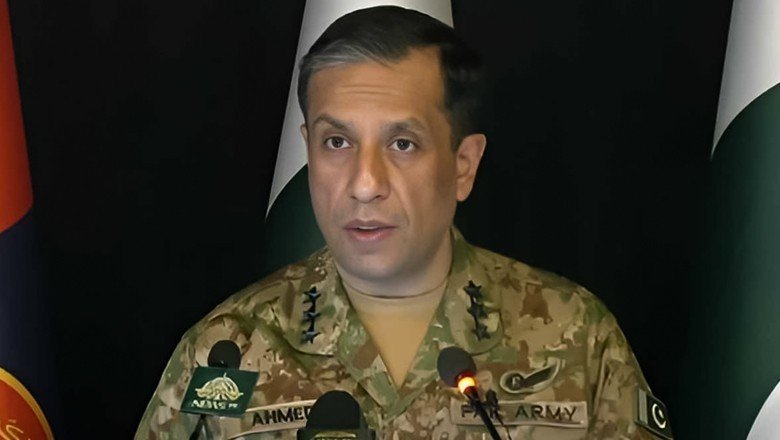
Addressing a detailed press conference, Ahmed Sharif Chaudhry, Director General of Inter-Services Public Relations, said terrorism remained the most serious threat facing the state, but stressed that the scale, clarity and coordination of Pakistan’s response in 2025 marked a decisive shift.
Unprecedented intensity of operations
Lt Gen Chaudhry said the first factor that made 2025 exceptional was the unprecedented intensity of counterterrorism operations across the country. According to official figures shared at the briefing, law enforcement agencies conducted 75,175 intelligence-based operations during the year — an average of more than 200 operations per day.
“These operations were not episodic or reactive; they were sustained, intelligence-driven and nationwide,” he said, adding that the consistency of action had disrupted terrorist networks and limited their ability to regroup.
Nationwide clarity on the nature of terrorism
The second defining factor, he said, was the emergence of nationwide clarity on what Pakistan was confronting.
“For the first time in years, there is broad national consensus on the nature of terrorism, its sources and its facilitators,” the DG ISPR said. He argued that ambiguity, denial and selective narratives had weakened past responses, while 2025 saw clearer recognition of terrorism as an organised, externally supported threat rather than isolated violence.
This clarity, he added, had strengthened coordination between security institutions, civilian authorities and law enforcement agencies.
International acknowledgment of Afghanistan-based militancy
The third factor highlighted by Lt Gen Chaudhry was what he described as growing international acknowledgment that Afghan soil was being used by terrorist groups targeting Pakistan.
He said Pakistan’s position — that militant organisations were operating from across the border in Afghanistan — had gained wider recognition in international forums. According to the ISPR chief, this acknowledgment had strengthened Pakistan’s diplomatic stance and reinforced its calls for accountability and regional cooperation against terrorism.
Revival of the National Action Plan
The fourth and final factor, he said, was the reinvigoration of the National Action Plan (NAP), Pakistan’s overarching counterterrorism framework.
Lt Gen Chaudhry said renewed focus on NAP had improved inter-agency coordination, strengthened intelligence sharing and refocused attention on dismantling terrorist financing, logistics and recruitment networks. He described the revival of NAP as critical to sustaining long-term gains rather than relying solely on kinetic operations.
A shift in outcomes
Providing historical context, the DG ISPR said Pakistan had been engaged in counterterrorism for more than two decades, but the results in 2025 reflected a shift in outcomes. He noted that while terrorism surged after 2021, the past year saw improved operational effectiveness, with security forces eliminating more militants relative to losses among personnel than in previous years.
“This does not mean the threat has ended,” he cautioned. “But it does mean the state has regained initiative.”
The road ahead
Lt Gen Chaudhry stressed that maintaining these gains would require political unity, provincial cooperation and consistent enforcement of law. He warned that any tolerance, ambiguity or political exploitation of extremist narratives could reverse progress.
Concluding the briefing, he said 2025 would be remembered as a consequential year — not because terrorism disappeared, but because Pakistan’s response became more coherent, coordinated and strategically grounded.
He reiterated that sustained national resolve, rather than short-term measures, would determine whether the gains of 2025 translated into lasting security and stability.
Also read: COAS & CDF Asim Munir Warns of Indian Proxies Disrupting Balochistan’s Progress