By The Public Purview
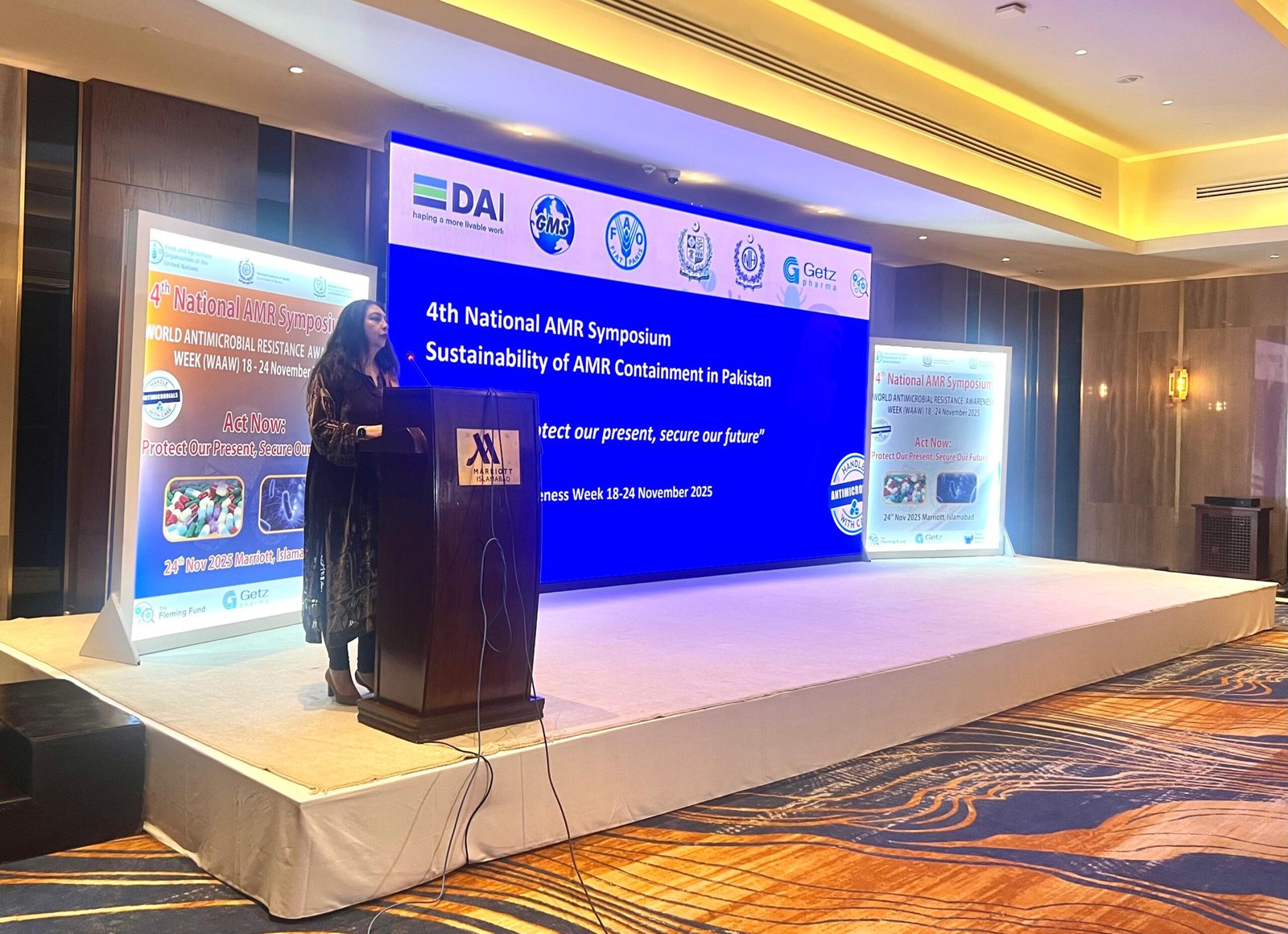
Islamabad: The Ministry of National Health Services, Regulations and Coordination (MoNHSRC) and the National Institute of Health (NIH) marked World Antimicrobial Resistance (AMR) Awareness Week with a national symposium focused on sustainable containment of AMR. The event highlighted the urgent need to operationalize the National AMR Action Plan effectively.
Call for Stronger Regulatory Frameworks
Dr. Ayesha Isani Majeed, Director General of Health, underscored the importance of regulatory and implementation frameworks. She stressed that AMR containment is a priority for the ministry. “We are dedicated to strengthening regulatory frameworks and ensuring that our hospitals and communities are equipped to use antimicrobials responsibly to preserve their efficacy for future generations,” she said.
Dr. Muhammad Salman, Chief Executive Officer of NIH, described AMR as a “silent pandemic.” He emphasized NIH’s role in leading the scientific response and noted that World AMR Awareness Week is a call to action. He said the focus must now shift from system establishment to ensuring sustainability of containment measures across human and animal health sectors.
Symposium on Sustainability of AMR Containment
The National AMR Symposium, organized by NIH in collaboration with MoNHSRC and the Fleming Fund, brought together health officials, policymakers, and international partners. The theme, “Sustainability of AMR Containment in Pakistan,” reflected the need to maintain momentum in the fight against drug-resistant infections.
The Special Secretary Health reaffirmed the government’s resolve to tackle AMR through policy enforcement and resource allocation. He emphasized the importance of a “One Health” approach, integrating human, animal, and environmental health efforts, particularly at the provincial level.
Transition Toward Self-Reliance
Dr. Qadeer Ahsan, Country Lead of the Fleming Fund, highlighted the transition toward self-reliance. He noted that the Fleming Fund has invested in modernizing Pakistan’s diagnostic landscape. The symposium aimed to map out how these investments can be sustained locally to ensure continuous, high-quality data generation that informs policy and saves lives.
Technical Sessions and Surveillance Updates
Following the plenary, experts presented updates on Infection Prevention and Control (IPC) and Healthcare-Associated Infections (HAI) surveillance programs. They stressed that robust IPC is the first line of defense against resistance.
Speakers shared findings from the national AMR surveillance system, offering a data-driven snapshot of resistance trends in Pakistan. Environmental AMR monitoring was also discussed, with emphasis on the presence of resistant pathogens in the environment and the need for stronger waste management protocols.
Roadmap for AMR National Action Plan 2.0
The symposium concluded with a high-level panel discussion on the implementation of the AMR National Action Plan (NAP) 2.0. Stakeholders addressed operational challenges and outlined a roadmap to enhance inter-provincial coordination. The discussion focused on ensuring that strategies are effectively operationalized to protect public health against the growing threat of antimicrobial resistance.
Read related news here: https://thepublic.pk/category/health/
For more stories and insights, visit The Green Post