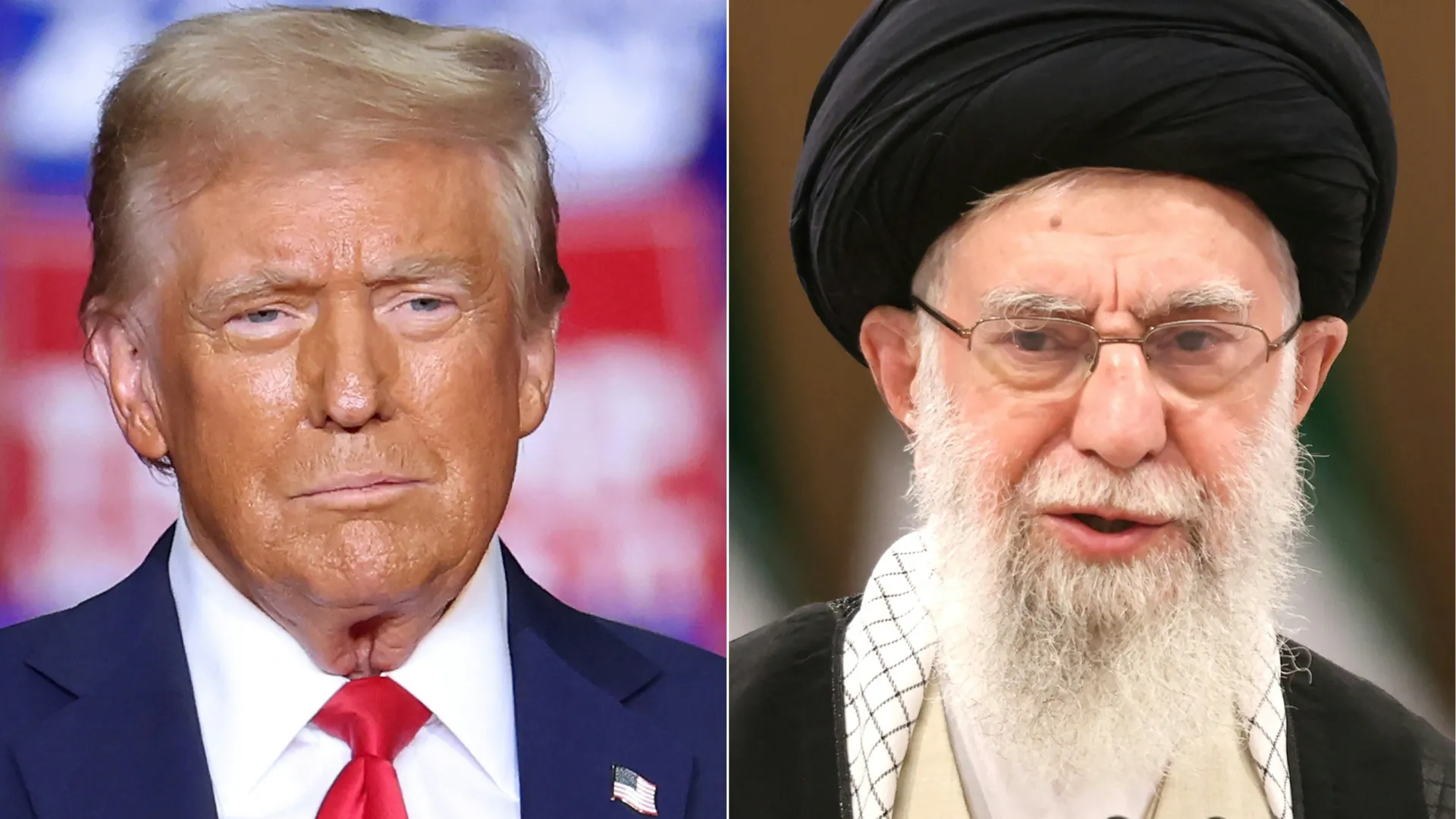
WASHINGTON/TEHRAN — A stark exchange between Iran’s Supreme Leader Ayatollah Ali Khamenei and former U.S. President Donald Trump over the handling of nationwide protests in Iran has reignited debate about America’s long history of foreign interference, illustrating how contemporary geopolitical tensions draw on a pattern of U.S. involvement abroad.
The confrontation began when Trump issued public warnings that the United States would intervene if Iranian authorities responded violently to anti-government demonstrations, prompting Tehran to condemn Washington’s statements as hostile interference. The U.S. interference in foreign countries debate has resurfaced as Iran faces its most widespread unrest in years, driven by economic hardship and deep political frustration.
Iran’s leadership denounced Trump’s remarks and accused the United States of long-standing hostility and efforts to stoke unrest, underscoring the continued salience of foreign involvement in domestic affairs. The Iranian Foreign Ministry stated that such positions are not motivated by concern for Iranian citizens but reflect a broader policy of pressure and interference, including economic warfare and psychological campaigns that it says contravene international law.
Current crisis and U.S. warnings
Protests in Iran began in late December amid a deepening economic crisis marked by soaring inflation and a plunging currency, then spread across all 31 provinces as demonstrators voiced opposition to rising prices and government mismanagement. Reports of deadly clashes, internet blackouts and mass arrests have compounded tensions, with Iranian authorities accusing protesters of acting as “mercenaries for foreigners.”
In his response to Trump’s statements, Khamenei labeled the former president “arrogant” and suggested that his influence would not prevail over Iran’s sovereignty. Iran’s military and political leaders have warned that external meddling will be met with force, framing foreign rhetoric as part of a broader attempt to undermine the Islamic Republic.
Also Read: Vladimir Putin Warns West Over Security Threats, Reaffirms Russia’s Readiness for Peace
Trump’s rhetoric resonated with hardliners in Washington, with some U.S. lawmakers issuing even stronger language, including threats against Iran’s top leadership if the Iranian government continues to crack down on dissent. Such exchanges reflect a shift toward more public, assertive messaging by American officials, contrasting with past diplomatic approaches.
Historical patterns of U.S. intervention
Scholars and analysts note that U.S. foreign policy has long blended diplomatic pressure with military, economic and covert tools to shape events abroad. From overt military actions and sanctions to public statements designed to influence foreign publics, American engagement in foreign political crises spans decades.
Historical interventions include military operations in the Middle East, indirect actions during the Cold War, covert support for factions in foreign states and economic sanctions intended to exert pressure on governments deemed hostile to U.S. interests. Critics argue that such policies have often prioritized strategic objectives over respect for national sovereignty, while defenders contend they serve to deter repression and uphold human rights.
Contemporary context and implications
The current confrontation illustrates both continuity and evolution in U.S. policy. Trump’s direct warnings to Tehran reflect a more public and immediate style of engagement that differs from the closed-door diplomacy typical of past administrations, yet it operates within the same broad paradigm of American influence on global affairs. Analysts caution that highly visible threats without coordinated international support may weaken credibility and could reinforce narratives used by regimes like Iran’s to justify crackdowns.
For Tehran, the emphasis on foreign interference serves dual purposes: delegitimizing domestic dissent by linking it to external actors and rallying nationalist sentiment to shore up political cohesion. How the protest movement evolves in the face of internal repression and external pressure will shape regional dynamics and U.S.–Iran tensions in the months ahead.