
Islamabad: Pakistan’s sole vertically integrated power utility, K-Electric, maintained a stable electricity supply for Karachi in 2025 while advancing investments in cleaner generation, transmission upgrades, and digital customer services, according to its year-end performance review.
The review outlines how the utility navigated a year of improving economic stability by balancing demand growth in the country’s largest city with operational resilience across generation, transmission, distribution, and supply. Chief Executive Officer Moonis Alvi said the company remained focused on reliability and customer service despite challenges arising from revisions to the Multi-Year Tariff (MYT).
Peak demand met during summer
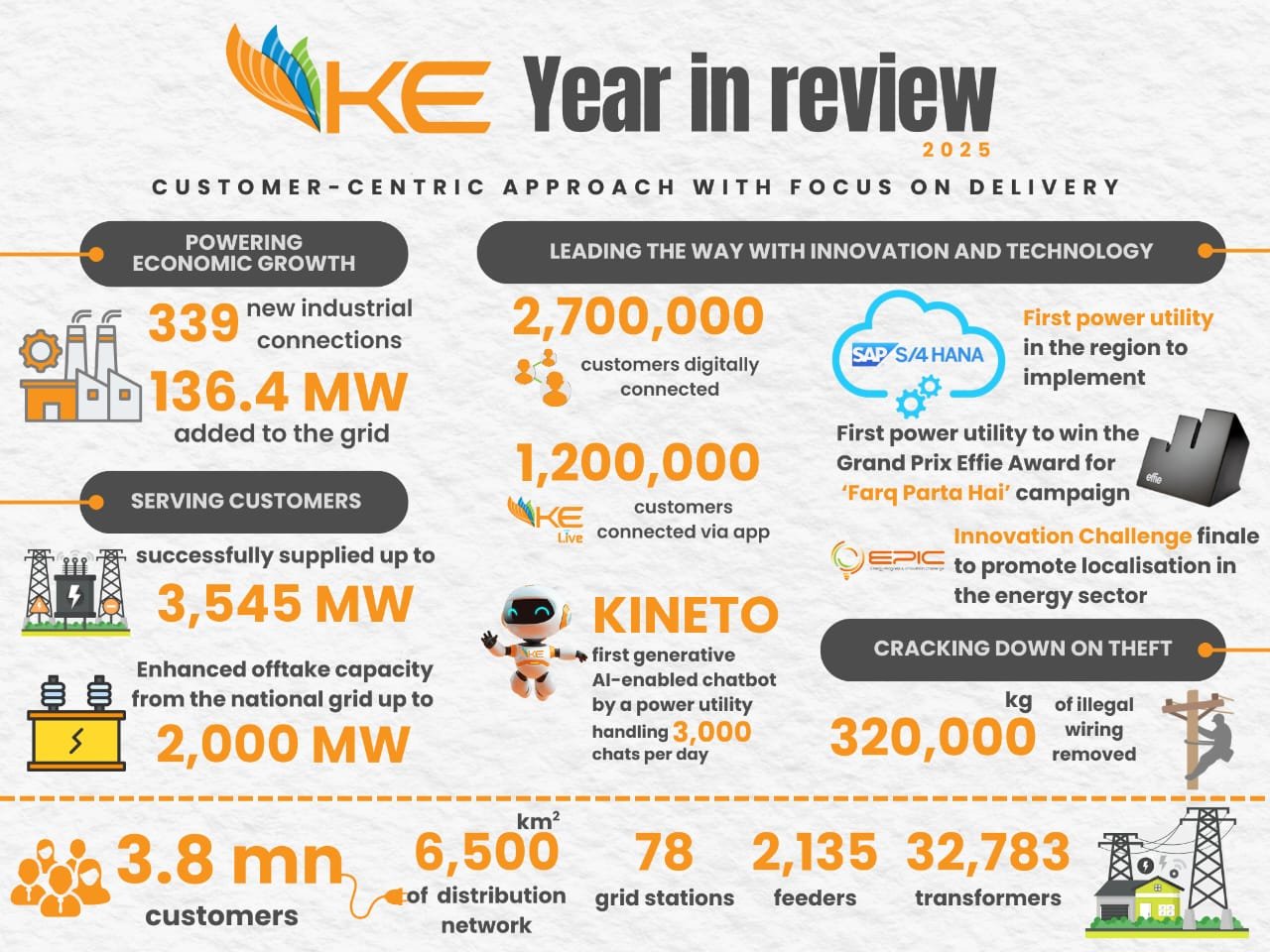
Karachi recorded a peak electricity demand of 3,563 MW in June 2025, while peak supply reached 3,545 MW, reflecting the grid’s ability to withstand intense summer loads. Average demand between January and November stood at around 2,353 MW, with consumption ranging from approximately 1,470 MW in winter to about 2,920 MW during summer months, mirroring seasonal and economic activity patterns.
Generation and clean energy planning
KE continued to optimize its existing generation assets during the year while advancing regulatory and planning processes for future capacity additions. As part of its transition toward cleaner energy, the utility secured some of the lowest renewable tariffs in Pakistan through competitive bidding, ranging between PKR 8.9 and PKR 11.6 per unit for 640 MW of clean energy projects.
Bid evaluation reports for projects at Dhabeji, Winder, and Bela were approved by the National Electric Power Regulatory Authority in May 2025, with the projects expected to add renewable capacity over the coming years, subject to remaining approvals.
Transmission strength and national grid access
Transmission investments continued to enhance system resilience. The KKI grid and associated interconnections enabled increased offtake of up to 2,000 MW from the national grid, improving access to comparatively lower-cost power and supporting Karachi’s industrial and commercial activity.
Theft control and loss reduction
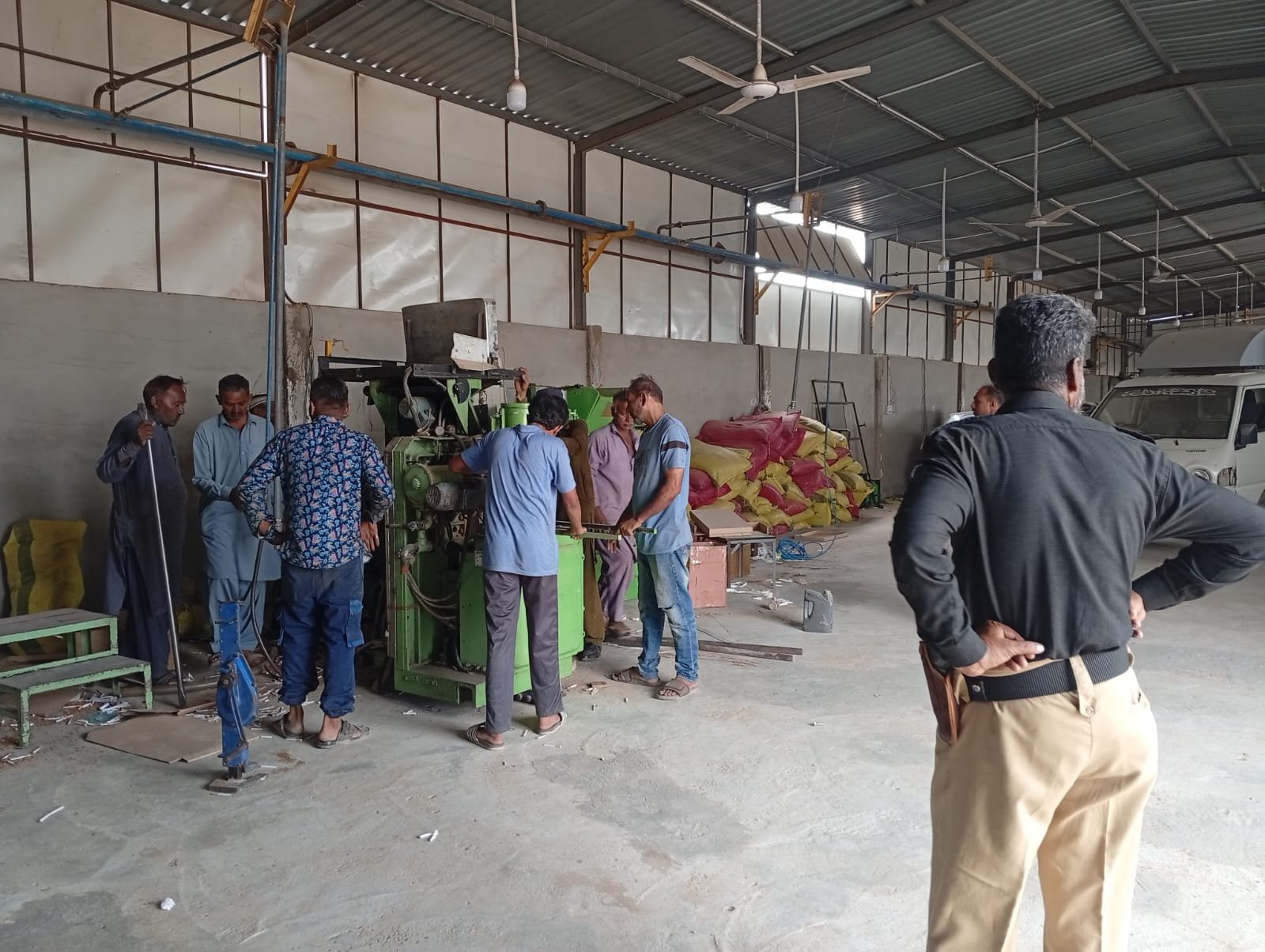
KE maintained its focus on reducing losses linked to electricity theft and non-payment in high-loss areas. More than 25,000 kunda removal drives were carried out across the service territory, and nearly 320,000 kilograms of illegal wiring were removed by the end of November.
Customer services and industrial growth
Customer facilitation remained a key focus, with 310 service camps organised across the city to address billing, payments, new connections, and meter-related concerns. These efforts contributed to recoveries of PKR 409 million.
Support for industrial expansion continued through the provision of 339 new industrial connections by November, adding a cumulative sanctioned load of 136.4 MW. The new connections served sectors including manufacturing, textiles, FMCG, ports, and export-oriented industries.
Net metering also expanded during the year, with 9,676 customers connected between January and November, adding more than 230 MW of distributed capacity to the network.
Digital transformation and engagement
Digital initiatives continued to reshape customer interaction and internal operations. KE launched Kineto, a generative AI-powered chatbot providing round-the-clock customer support and handling nearly 3,000 chats daily on average. The utility also implemented SAP S/4HANA RISE to strengthen cybersecurity and support data-driven decision-making.
Digitally connected customers rose to 2.7 million from 1.94 million a year earlier. E-billing adoption increased to 13 percent from 8 percent, while nearly 70 percent of bills were paid through digital channels. By early December, active users of the KE Live App had crossed 1.2 million.
Innovation initiatives and recognition
KE also hosted the Energy Progress & Innovation Challenge (EPIC) in June 2025, drawing more than 250 entries from entrepreneurs, researchers, and academia. The submissions focused on areas such as AI-based demand forecasting, asset health diagnostics, theft detection, renewable integration, and battery storage optimisation.
Tariff framework and outlook
During the year, KE’s MYT was approved, providing a framework for investment and performance benchmarks. A subsequent downward revision by NEPRA is currently under legal challenge and pending adjudication. Separately, NEPRA approved write-off claims of around PKR 50 billion for the period FY2017–2023, recognising them as legitimate costs after review.
Industry analysts note that sustaining long-term investment in the power sector will depend on tariff certainty and broader improvements in the sector’s financial health.
Looking ahead, KE said it remains focused on strengthening infrastructure, supporting industrial growth, improving recoveries, and expanding digital access while balancing affordability, reliability, and regulatory compliance.
Read related news here: https://thepublicpurview.com/nepra-allows-partial-write-off-claims-to-k-electric/