

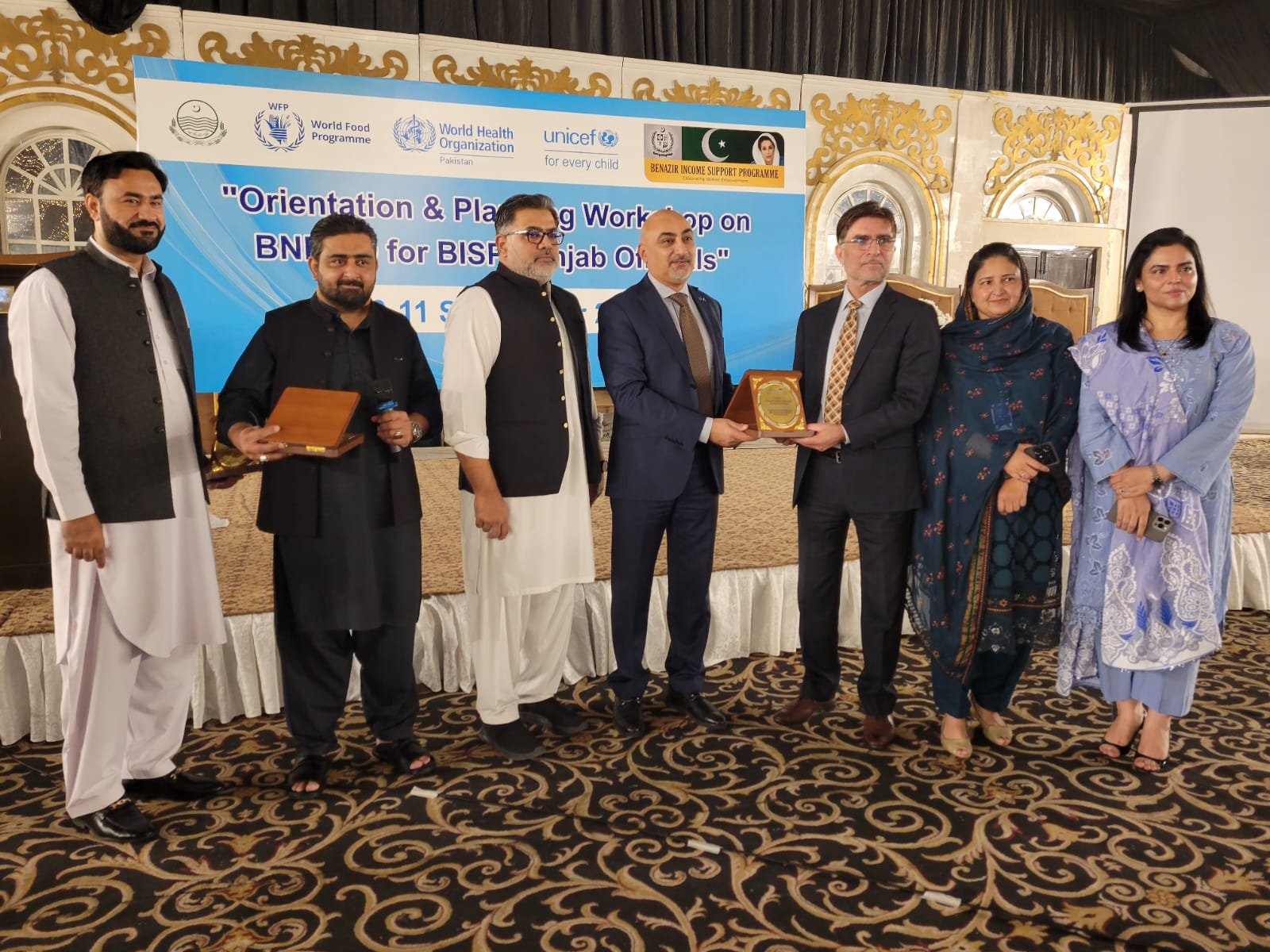
LAHORE, Sept 12 (ABC): The Benazir Income Support Programme (BISP) and UNICEF have strengthened preparations for the implementation of Phase III of the Benazir Nashonuma Programme (BNP), with a focus on community engagement, nutrition awareness and behavioural change to combat maternal and child malnutrition.
A two-day awareness, planning and capacity-building workshop organized by BISP Central Zone Punjab in collaboration with UNICEF concluded in Lahore, bringing together district and tehsil-level officials from across Central Punjab.
The workshop provided field-level leadership with practical guidance on the operational implementation of Phase III, advocacy and Social and Behaviour Change Communication (SBCC), particularly targeting the nutritional needs of pregnant women, breastfeeding mothers and children under two years of age.
Speaking on the occasion, Director General BISP Central Zone Punjab Nasiruddin Sarwar said the transition to Phase III marked a significant milestone in efforts to address malnutrition and stunting among children from vulnerable and deserving households across Punjab.
He said cash assistance alone could not break the cycle of intergenerational poverty unless it was accompanied by sustained behavioural change. He described district and tehsil managers as the backbone of BISP’s field operations and appreciated UNICEF’s collaboration in equipping field staff with the information, tools and strategies needed to effectively reach eligible mothers and children.
UNICEF Chief Field Officer Rameez Behbudov reaffirmed the organization’s commitment to continued cooperation with the Government of Pakistan and BISP to improve nutrition outcomes for mothers and children.
He said Phase III was particularly important because of its emphasis on community-level advocacy and behavioural change.
Director BISP Central Zone Waqar-un-Nisa said the workshop had provided administrative and field officers with clear practical guidelines for effective implementation of the programme.
She said aligning the grassroots administrative system with the SBCC framework would help improve field operations, strengthen service delivery at Nashonuma Centres and make direct engagement with beneficiaries more effective across Central Punjab.
During the concluding session, participants from different districts took part in group exercises to review challenges encountered in field-level implementation and identify strengths, weaknesses, concerns and recommendations for improvement.
Certificates were distributed among participants at the end of the workshop, while officials were also invited to share their experiences and knowledge gained during the two-day event.
Senior BISP Punjab officials, district and tehsil-level field officers and representatives of UNICEF and other development partners, including the World Food Programme (WFP) and World Health Organization (WHO), attended the workshop.
BISP and UNICEF reiterated their commitment to effective implementation of Phase III and stronger collaboration aimed at improving maternal and child nutrition among vulnerable communities and preventing childhood stunting.