

Pakistan has long stood as a beacon of peace in a troubled world. Since its birth, the nation has pursued no aggressive designs against any neighbour or distant power, choosing instead the path of restraint and constructive engagement. Yet when provoked or threatened, it has risen with unyielding resolve, presenting an impenetrable defence that has time and again turned back adversity. The measured and decisive response to Indian aggression in May of last year remains fresh in the memory of the international community, a testament to this enduring spirit. In the realm of peace-making, however, Pakistan’s recent contribution to the Middle East stands unparalleled in its scope and success.
When tensions between the United States and Iran threatened to engulf the region in open conflict earlier this year, Pakistan stepped forward not as a distant observer but as an active mediator, driven by the conviction that dialogue must prevail over destruction. Under the wise and steady leadership of Prime Minister Shehbaz Sharif, the country embarked upon a mission of shuttle diplomacy and backchannel engagement that would ultimately bear historic fruit. Field Marshal Syed Asim Munir, whose stature as a military leader is matched by his diplomatic insight, worked in close concert with the Prime Minister, alongside Deputy Prime Minister and Foreign Minister Ishaq Dar, Defence Minister Khawaja Asif, Interior Minister Mohsin Naqvi, and other senior figures. Their collective efforts reflected the finest traditions of Pakistani statecraft.
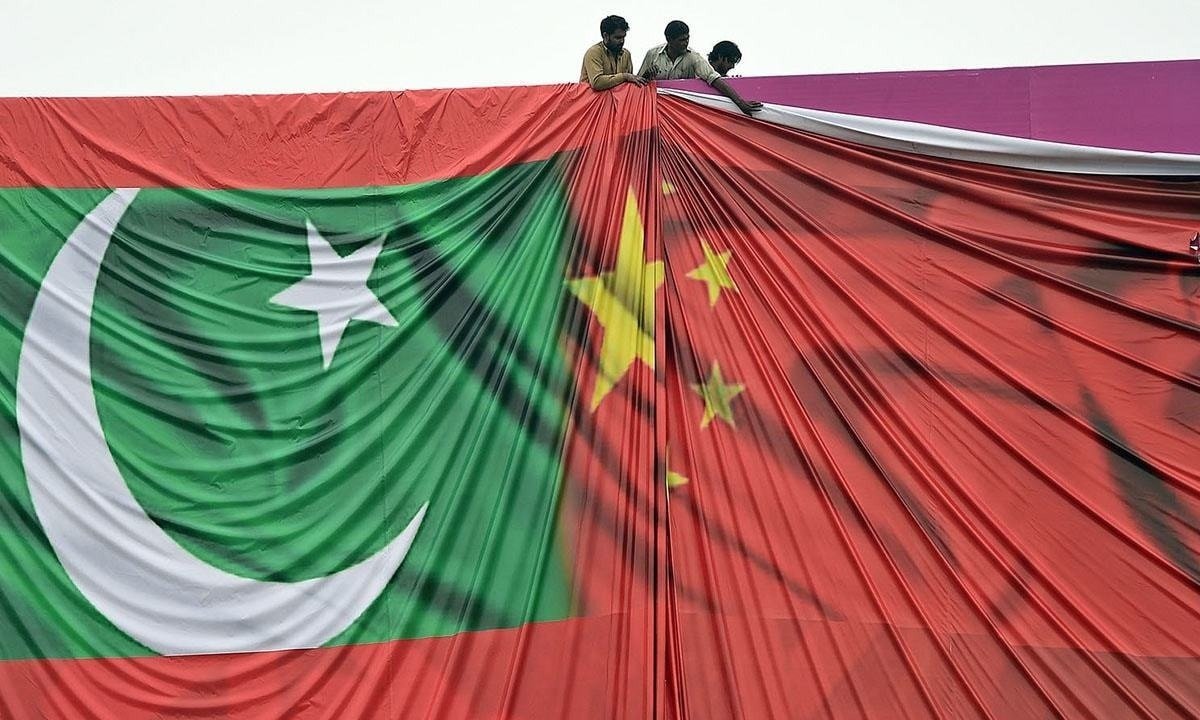
The process began in earnest in mid-March. Messages were conveyed between Washington and Tehran, building bridges where none had existed for decades. On the twenty-third of March, Prime Minister Shehbaz Sharif held direct conversations with Iranian President Masoud Pezeshkian, while Field Marshal Syed Asim Munir engaged with President Donald Trump. Over the following days, Pakistan intensified its quiet diplomacy, facilitating indirect communications that kept both sides talking even as the spectre of escalation loomed. By the end of the month, in partnership with China, Islamabad put forward a five-point initiative aimed at securing a ceasefire and opening the door to substantive negotiations.
In early April, Pakistan advanced a carefully structured forty-five-day, two-phased truce proposal. The tireless work of its leadership bore immediate result when, on the seventh and eighth of April, a two-week ceasefire was secured. President Trump himself acknowledged Pakistan’s central role in the announcement, while Iranian officials confirmed their approval. The personal involvement of Prime Minister Shehbaz Sharif and Field Marshal Syed Asim Munir in those final, delicate hours proved decisive. Encouraged by this breakthrough, both Washington and Tehran agreed to send high-level delegations to Islamabad for face-to-face discussions—the first direct engagement of their kind since 1979.
Those mid-April talks at the Serena Hotel, though intense and at times protracted, marked a watershed. Over more than twenty hours of negotiations, progress was achieved even if a comprehensive agreement remained elusive at first. With characteristic perseverance, Pakistan continued its efforts. Field Marshal Syed Asim Munir travelled to Tehran, while Prime Minister Shehbaz Sharif engaged regional partners in Saudi Arabia, Qatar, and Turkey. At Pakistan’s urging, the initial ceasefire was extended indefinitely, providing precious time for cooler heads to prevail. Throughout April and May, proposals flowed through Pakistani channels. Multiple visits by the Field Marshal to Tehran and Beijing, and by the Prime Minister to key capitals, kept the momentum alive.
The culmination came in mid-June. On the fourteenth, Prime Minister Shehbaz Sharif announced the finalisation of the Islamabad Memorandum of Understanding. Three days later, the agreement was formally concluded between President Trump and President Pezeshkian, with Pakistan serving as the trusted mediator. The MoU encompasses a sustained ceasefire, the reopening of the Strait of Hormuz to peaceful navigation, measured sanctions relief, and a sixty-day framework for addressing nuclear concerns. It stands today as a landmark achievement, preventing what might have become a devastating regional war and offering a path toward lasting stability.
Throughout this endeavour, Prime Minister Shehbaz Sharif has conducted himself as a statesman of vision and humility. He has consistently placed the national interest above personal acclaim, generously crediting the pivotal contributions of Field Marshal Syed Asim Munir and the armed forces’ leadership. In an era when leaders often seek the spotlight, such grace is rare. Field Marshal Munir’s role has been extraordinary: a serving head of the armed forces who has devoted his energies not merely to the defence of his homeland but to the broader cause of global peace.
History records few parallels. George Marshall, the only professional soldier previously honoured with the Nobel Peace Prize, received it years after leaving active military command, in recognition of his postwar diplomatic work. Field Marshal Munir, by contrast, has rendered this service while still at the helm of Pakistan’s defence establishment.
Should the Nobel Committee see fit to bestow its Peace Prize upon him, it would be a fitting tribute both to the man and to the peace-loving ethos of the Pakistani state. More importantly, it would affirm that patient diplomacy, rooted in sincerity and resolve, can still steer the world away from the brink. Pakistan has once again demonstrated that it stands ready to defend its sovereignty with courage and to promote international harmony with equal dedication. In a fractured age, such a voice deserves to be heard and heeded.