
AK Wazir
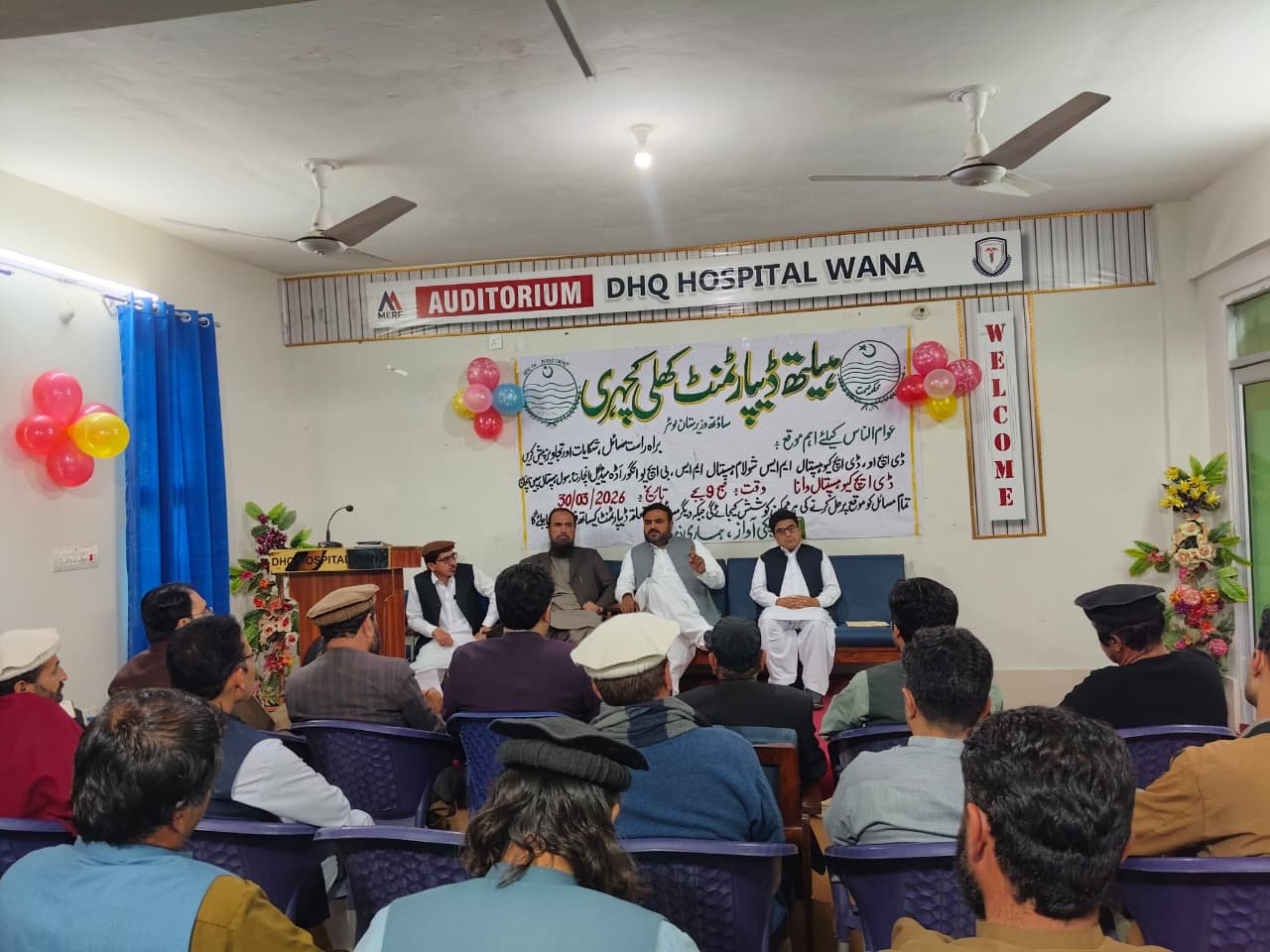
SOUTH WAZIRISTAN LOWER: The Health Department organized an open katcheri (public forum) at the District Headquarters (DHQ) Hospital Wana on Monday to address public grievances related to healthcare services. The initiative aimed to provide a direct platform for the local community to voice their concerns, while officials assured prompt and practical measures for resolving the issues raised.
According to details, the open katcheri was held at DHQ Hospital Wana with the primary objective of listening to the healthcare-related problems faced by the public and ensuring their timely resolution. The event was attended by District Health Officer (DHO) Dr Adnan, Medical Superintendent (MS) of Sholam Category D Hospital Dr Mehmood Jan, Dr Roman, and other relevant officials. A large number of tribal elders, social figures, and members of the local community also participated and actively presented their concerns.
Hamza Foundation seeks government support as thalassemia cases rise in Peshawar
Addressing the gathering, DHO Dr Adnan stated that funds had been approved for several healthcare facilities, including Shakai Basic Health Unit (BHU), Samar Bagh, Spin Sol Hospital, and Toi Khulah Hospital. He added that both basic and advanced healthcare facilities would soon be made available at these centers. He emphasized that the completion of these projects would significantly improve healthcare services in the region and ensure better access to treatment for local residents.
Dr Roman, in his remarks, said that efforts were underway to further improve the quality of healthcare services at DHQ Hospital Wana. He expressed commitment to enhancing service delivery standards and assured that, InshaAllah, patients would not be given any reason for complaints in the future.
Similarly, MS Dr Mehmood Jan stated that Sholam Hospital was now equipped with almost all essential facilities. He urged the public to visit the hospital without hesitation and benefit from the available medical services. He further noted that continuous efforts were being made to improve the standard of treatment and patient care.
During the open katcheri, participants highlighted several issues, including the shortage of medical staff, lack of essential medicines, inadequate facilities, and poor sanitation conditions in government hospitals. The community stressed the need for ensuring the availability of basic healthcare services so that patients could receive timely and quality treatment. Some participants also pointed out the lack of modern medical equipment and called for strengthening emergency services.
In response, DHO Dr Adnan assured the participants that all issues raised would be addressed on a priority basis. He directed the concerned authorities to resolve urgent matters on the spot, while more complex issues would be referred to higher authorities for sustainable solutions.
Several complaints were addressed immediately during the session, which was appreciated by the participants. However, some issues requiring detailed consideration were forwarded to the relevant authorities to ensure long-term and effective resolution.
Tribal elders and community members welcomed the initiative, stating that such open forums play a vital role in bridging the gap between the public and government institutions. They urged the authorities to continue organizing similar forums regularly to ensure timely resolution of public issues.
In conclusion, Health Department officials reiterated their commitment to providing quality healthcare services to the people. They emphasized that effective strategies would be implemented to address public complaints and further strengthen the healthcare system in South Waziristan Lower.