LAHORE, April 9 (ABC): Authorities reviewed progress on major heritage conservation projects in Lahore, focusing on restoration work at key sites including the Lahore Fort, Wazir Khan Mosque and adjoining areas of the Walled City.
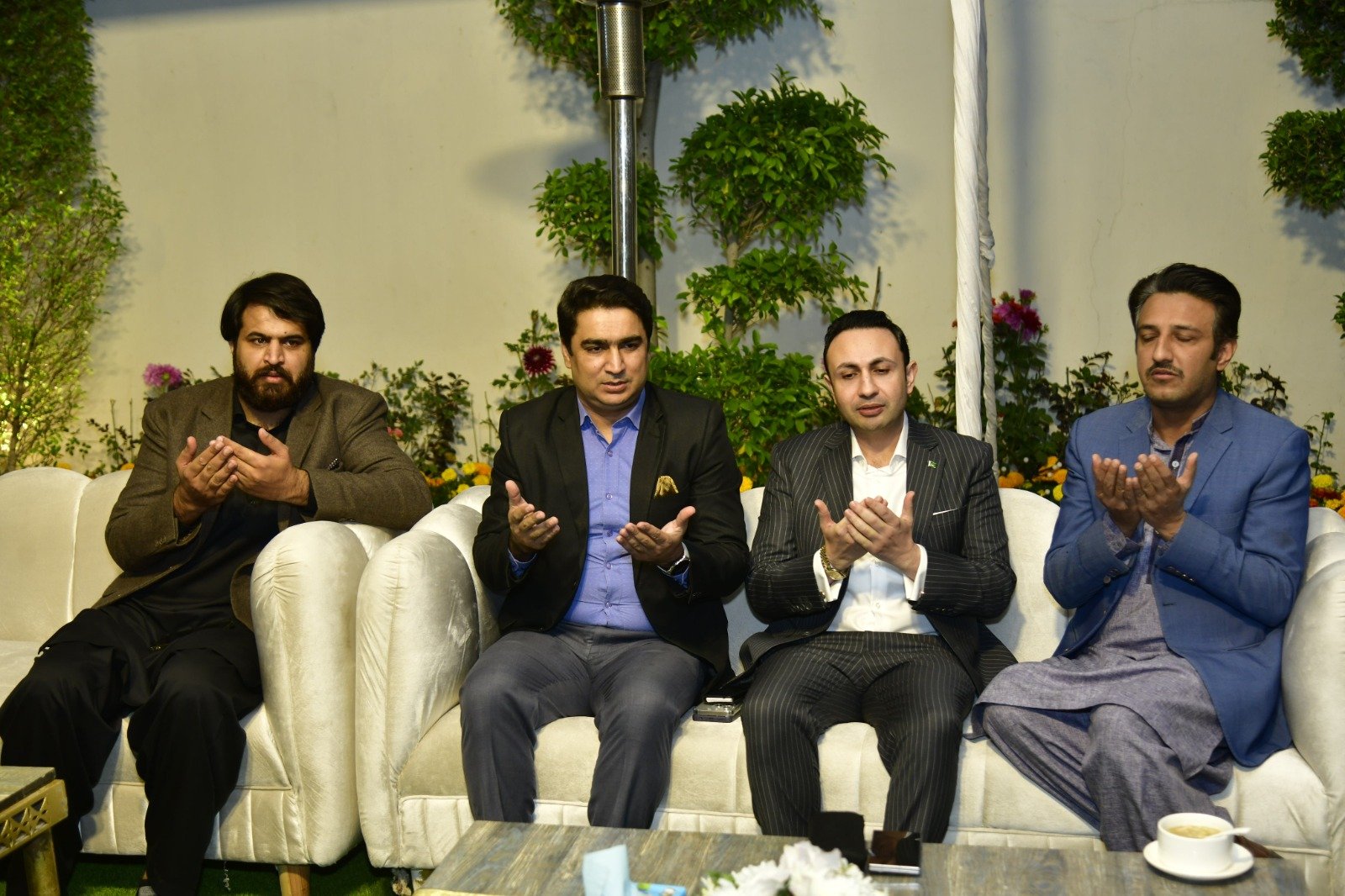
Officials from the Aga Khan Cultural Service – Pakistan (AKCS-P) and the Walled City of Lahore Authority (WCLA) held a detailed meeting to assess ongoing work, discuss challenges, and outline future strategies. Participants included AKCS-P Chairman Akbar Ali Pesnani, CEO Tausif Khawaja, board members, and WCLA Director General Najmus Saqib.
The meeting examined joint conservation efforts and explored ways to strengthen technical practices, improve coordination, and promote sustainable development alongside heritage preservation.
Extensive restoration underway at Wazir Khan Mosque
Authorities highlighted significant progress at the Wazir Khan Mosque, one of Lahore’s most prominent Mughal-era landmarks. Restoration teams carried out structural consolidation of domes, walls, and foundations to stabilise the historic structure.
They also restored floors, lime plaster, rooftops, and parapets using traditional materials and techniques. Conservation experts worked to preserve original architectural elements while ensuring long-term durability.
Officials noted that conservation efforts extended beyond the mosque building. Teams rehabilitated the surrounding neighbourhood, which had faced deterioration over time. They restored historic houses along the southern side of Chowk Wazir Khan and conserved smaller monuments and façades within the square.
Authorities plan further interventions at the site. These include conservation of the north-west and south-west minarets and restoration of frescoes inside the prayer chamber. They also aim to redevelop the southern neighbourhood, including façade improvements of selected properties such as the WCLA office.
Officials said these efforts aim to transform the mosque and Chowk Wazir Khan into a vibrant cultural, tourism and community space.
Sheesh Mahal restoration advances with specialised techniques
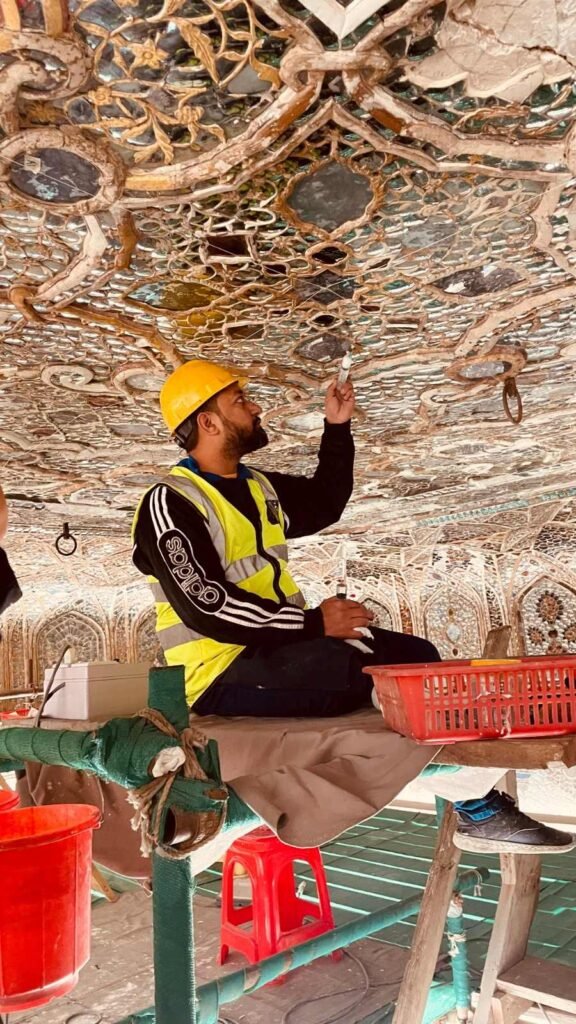
The meeting also reviewed progress on conservation projects at the Lahore Fort, supported by the Agence Française de Développement (AFD). Work at the Sheesh Mahal, known for its intricate mirror work, has moved forward in phases.
Teams completed site assessments and emergency stabilisation to address structural risks. Experts conducted laboratory testing to identify suitable conservation materials and ensure compatibility with the original structure.
Authorities trained skilled labour in traditional stucco techniques, which are now being applied in restoration work. They also undertook specialised efforts to recreate the original mirror elements of the palace.
To achieve this, experts revived a closed industrial unit in Shikarpur to manufacture custom-made convex mirrors that match the historic design. Officials described this step as critical for maintaining authenticity in restoration.
Workers addressed structural damage by applying grouting to fill voids and cracks in walls and ceilings. This process strengthened the structure and helped prevent water infiltration.
Picture Wall conservation nears completion
At the Picture Wall of the Lahore Fort, one of the largest mural walls in the world, conservation work has reached its final stages.
Teams reconstructed panel impressions and carried out brick imitation to match the original construction style. Conservation experts also retraced and repainted frescoes across numerous panels with careful attention to original patterns and colours.
Officials said the work preserved the artistic integrity of the wall while reinforcing its structural stability.
Commitment to expand heritage conservation efforts
Participants reaffirmed their commitment to strengthen collaboration between AKCS-P and WCLA. They emphasised the need to expand conservation efforts to additional heritage sites and cities across Pakistan.
The meeting also discussed potential joint initiatives involving the Department of Archaeology to enhance institutional coordination and support long-term preservation of historic assets.
Officials noted that continued collaboration, use of traditional craftsmanship, and adoption of international best practices remain central to safeguarding Lahore’s architectural heritage.