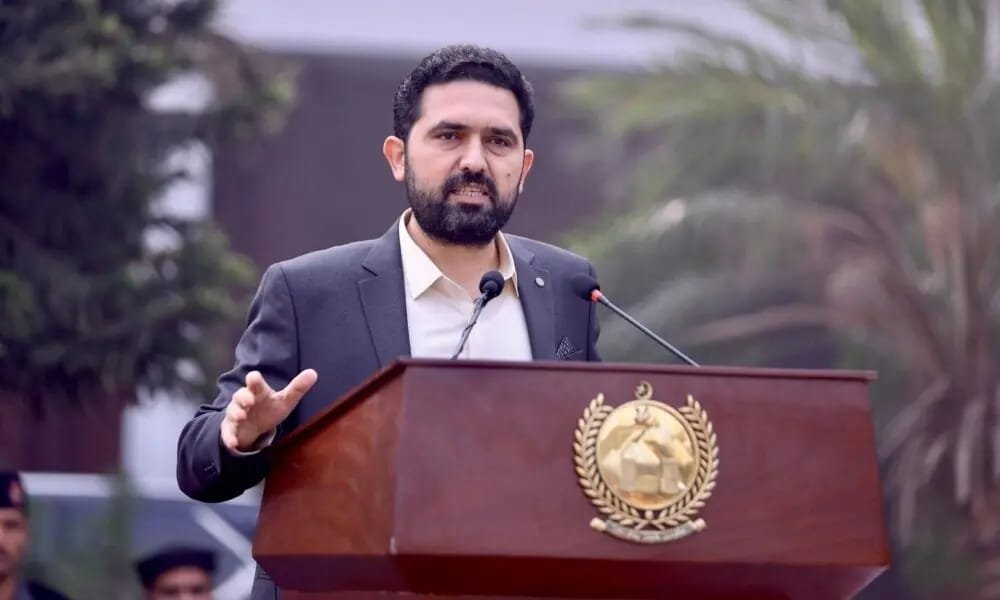
Peshawar: Khyber Pakhtunkhwa Chief Minister Muhammad Sohail Afridi has launched the Good Governance Roadmap 2.0, expanding the province’s reform programme to 450 initiatives across multiple sectors to improve public service delivery and administrative efficiency.
The updated roadmap increases the number of reform measures from 362 to 450 and brings 10 additional departments under its scope. Officials said the initiative is aimed at strengthening governance systems, enhancing transparency and accelerating service delivery across the province.
University of Swat holds Ehsas-e-Shajar plantation drive under KP tree campaign
Addressing a high-level briefing, the chief minister said the implementation of reforms would be closely monitored, warning that delays in public services would not be tolerated. He also directed authorities to ensure improved facilities for tourists ahead of the upcoming season, including safety measures and infrastructure upgrades at key destinations.
Key reforms and digital initiatives
The roadmap includes a range of digital governance measures, such as the introduction of an e-challan system to streamline vehicle ownership transfers and improve traffic management. Authorities are also working on integrating land records with NADRA to enhance transparency and reduce corruption.
Other initiatives include an e-pension system for retirees, mobile land record units to facilitate citizens, and digitisation of driving licences. A camera-based traffic enforcement system and a School Zone Safety Package are also being introduced to improve road safety.
Focus on infrastructure and environment
The chief minister directed officials to prioritise development projects, including work on the Nathia Gali Road and expansion of railway connectivity to District Khyber and Mardan. Plans are also underway to launch an inter-city transport system under a public-private partnership model.
Environmental measures include expansion of afforestation efforts under the Billion Tree Plus Programme, along with the establishment of smog monitoring systems and climate observatories. Authorities are also introducing systems for hazardous waste and wastewater monitoring.
Progress across sectors
Officials said reforms are currently being implemented in 16 departments, with hundreds of review meetings conducted to ensure progress. In the health sector, 150 Basic Health Units have been made operational round-the-clock, with more to follow by mid-2026.
In education, over 100,000 students have been provided furniture and thousands awarded scholarships. Municipal services have also been expanded, with large-scale cleaning of drainage systems and rural waste collection initiatives underway.
Social welfare programmes include financial support for orphan children and widows, while agricultural initiatives focus on improving productivity, including the conversion of wild olive trees into productive varieties.
The provincial government said the expanded roadmap is expected to improve governance standards and deliver more efficient public services across Khyber Pakhtunkhwa.