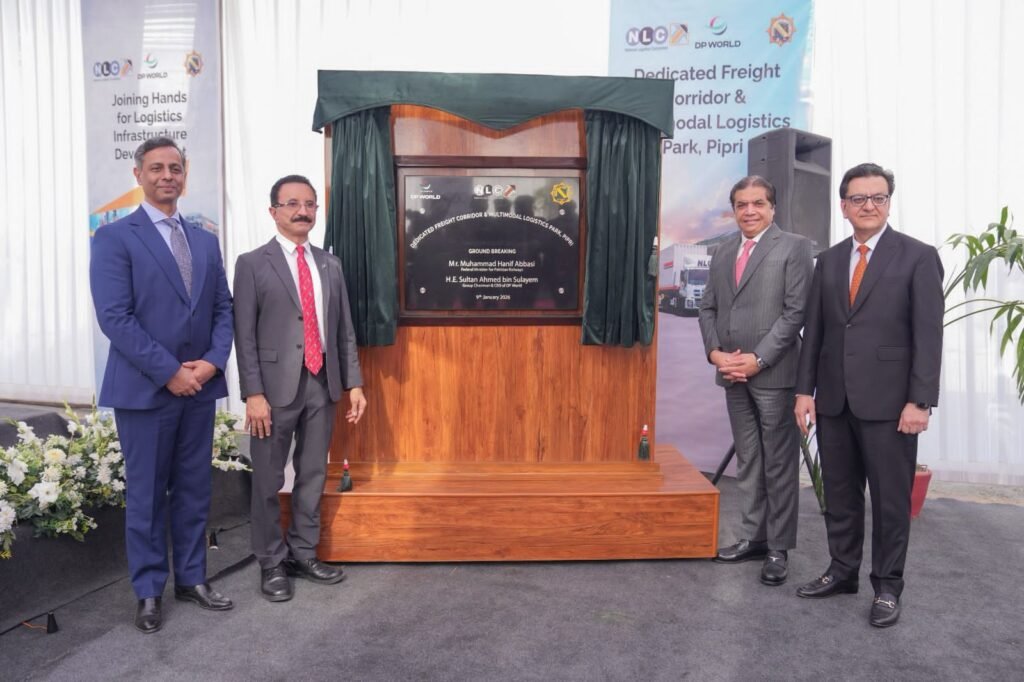
Karachi — The National Logistics Cell (NLC) has initiated construction of a Dedicated Freight Corridor (DFC) and a Multimodal Logistics Park at Pipri, a landmark infrastructure project aimed at easing chronic traffic congestion and improving cargo handling at Karachi Port.
For decades, the lack of an effective rail-based freight system at Karachi Port has resulted in severe container pile-ups, delayed cargo movement, and heavy dependence on road transport. This has not only strained the city’s road network but also increased environmental pollution and operational costs for businesses.
The Dedicated Freight Corridor project is designed to shift a substantial volume of container traffic from roads to rail, offering a sustainable and efficient logistics solution. The project’s groundbreaking ceremony was attended by Federal Minister for Railways Hanif Abbasi and DP World Group Chairman and CEO Sultan Ahmed bin Sulayem, highlighting strong public-private collaboration and international investor confidence.
NLC will develop the project in multiple phases with an estimated foreign direct investment of USD 400 million. Officials confirmed that the first phase is expected to be completed within four months. The scope includes rehabilitation of a 52-kilometre railway track connecting Karachi Port to Pipri Marshalling Yard, along with the establishment of a modern logistics park capable of handling multimodal freight operations.
The initiative is strategically aligned with the China–Pakistan Economic Corridor (CPEC) and Pakistan Railways’ ML-1 upgrade project, positioning Karachi as a more competitive regional trade gateway. Upon completion, imported containers will be transported directly by rail from the port to Pipri and then distributed to markets across Pakistan, as well as to China, Central Asia, and other regional destinations.
Authorities believe the project will significantly reduce congestion at Karachi Port, improve turnaround times, enhance trade efficiency, and bring visible improvements in urban traffic flow and environmental conditions.